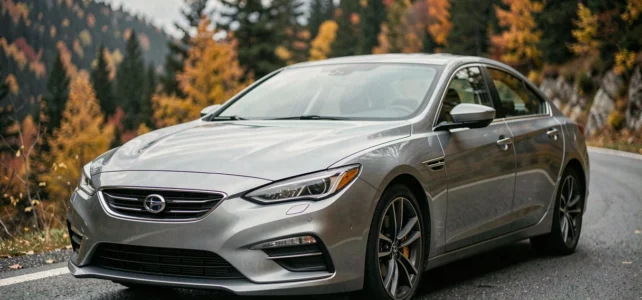
Electrified powertrains now account for around seven out of ten new cars in Europe. This shift, confirmed by data from the first half of 2026, is not just about the rise of fully electric vehicles: it is the simple hybrid that captures the largest share. The automotive market is undergoing a technical reshaping whose consequences are evident on both production lines and pricing grids.
Euro 7 Standard: What Technically Changes from November 2026
The Euro 7 standard comes into effect in November 2026 for new cars and light commercial vehicles. Unlike previous standards, it is not limited to exhaust emissions. Brake and tire particle emissions are now regulated, a first on a global scale.
Manufacturers must review the entire braking system. Traditional ventilated cast iron discs generate fine particles that the Euro 7 standard caps at a level never imposed before. We are already seeing a shift towards tungsten carbide-coated discs and dust-capturing systems integrated into the calipers.
The impact on electric vehicles deserves attention. Although lacking a thermal engine, they are subject to limits on particles outside of exhaust. Their high mass accelerates tire and brake pad wear, placing them under direct scrutiny of the standard. To keep track of these regulatory developments and their repercussions on market models, the site autoworldblog.net in detail covers these topics as news unfolds.
Another technical point: Euro 7 introduces battery durability requirements for electric and plug-in hybrid vehicles. Manufacturers will need to guarantee a minimum retention capacity over a defined period, which will impact choices of cell chemistry (NMC, LFP) and thermal management strategies.

Non-Rechargeable Hybrid: The Dominant Powertrain in the European Market
The simple hybrid has become the leading powertrain in Europe, ahead of diesel, pure gasoline, and fully electric. This result, unthinkable just three years ago, reflects a pragmatic choice by buyers.
The mechanism is clear: a thermal block coupled with a small electric motor and a low-capacity battery that recharges during braking. No plug, no long electric range, but reduced consumption in urban and suburban cycles. Toyota and Renault dominate this segment with mature architectures.
We recommend not to confuse this trend with a retreat of battery electric vehicles. Both dynamics coexist. The simple hybrid meets a specific usage profile:
- Drivers covering less than 15,000 km per year, mostly in urban and mixed journeys, for whom investing in a home charging station is not justified
- Company fleets subject to tax constraints on CO2 emissions but without on-site charging infrastructure
- Markets where the public charging network remains insufficient, particularly in rural French areas
The entry price of a simple hybrid remains significantly lower than that of an equivalent battery electric vehicle. This price gap, combined with the absence of range anxiety, explains the statistical shift observed in the first half of 2026.
Battery Electric: Models Redefining the B Segment in France
The segment of electric city cars is concentrating the most intense commercial offensive since the beginning of the year. The duel VW ID.Polo against Renault 5 E-Tech crystallizes the battle for the electric B segment. Volkswagen embraces a stylistic kinship with its thermal models, while Renault plays the neo-retro card.
BYD enters the equation with the Seal 06, positioned close to the Tesla Model 3 in size but at a significantly more aggressive price. This pricing strategy, made possible by advanced vertical integration (in-house cells, proprietary semiconductors), puts pressure on European manufacturers who still source their cells from third-party suppliers.
Audi is not left behind in the high-end electric market, but it is indeed the B segment that concentrates the volumes. The French market remains the largest electric market in Western Europe in terms of mix share, driven by the ecological bonus and social leasing.
Used Electric: A Market in Structuring
The fleet of used electric vehicles is starting to weigh in. The first mass-produced models (Renault Zoé, Peugeot e-208, Tesla Model 3 phase 1) are entering the secondary market with three to five years of age. The question of residual battery warranty is becoming a priority purchase criterion, especially as the Euro 7 standard will impose capacity retention thresholds on new models, creating an implicit benchmark for used vehicles.
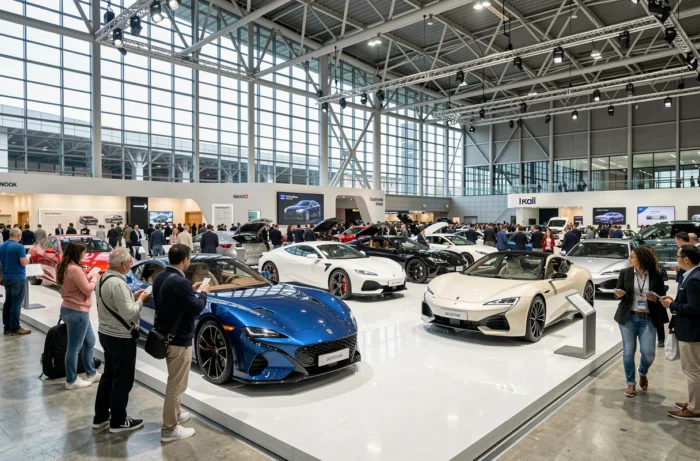
Car Tests 2026: Technical Criteria to Watch Beyond the Specs
Tests published by specialized press often focus on power, 0 to 100 km/h, and announced range. Three technical parameters deserve more attention in 2026:
- The actual DC charging curve: a high power peak means nothing if the curve drops after 20% charge. The time from 10% to 80% remains the only reliable metric for comparing two electric models
- Highway consumption at a stabilized 130 km/h, rarely communicated by manufacturers but measurable in tests. The gap with the WLTP cycle regularly exceeds 30% on aerodynamically disadvantaged models (high SUVs, roof bars)
- The behavior of regenerative braking in one-pedal mode and its interaction with mechanical braking, a parameter directly related to future Euro 7 constraints on brake particles
These criteria allow for differentiation between models whose technical sheets seem close. We observe that the most useful tests in 2026 are those that measure actual consumption over a standardized mixed route, not those that reproduce the manufacturer’s figures.
The upcoming regulatory deadline of November 2026 will force manufacturers to rethink components long considered secondary. For buyers, the choice of a new or used model now involves a more technical reading of the specifications, beyond the catalog price and displayed power.