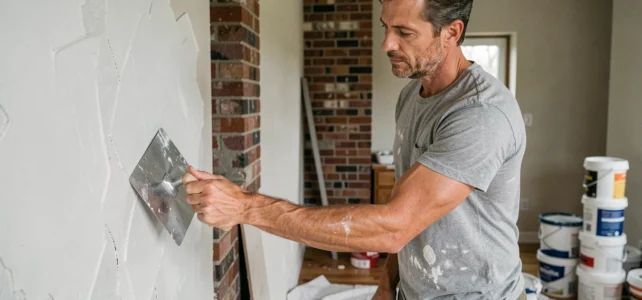
Renovating an interior involves coordinating technical aspects whose costs, timelines, and regulatory constraints vary significantly from one section to another. Before starting an interior renovation project, comparing these variables allows for making informed decisions between insulation, redistribution of rooms, and replacement of equipment without unpleasant surprises regarding the budget or schedule.
Interior Renovation: Cost and Timeline Variations by Type of Work
Renovation projects do not have the same investment or duration. The table below summarizes the typical ranges observed for the most common sections in residential housing.
| Type of Work | Share of Total Budget | Average Duration of Work | Regulatory Complexity |
|---|---|---|---|
| Thermal insulation (walls, attics) | High | Several weeks | High (RE standards, conditional aids) |
| Kitchen renovation | Medium to high | Two to four weeks | Medium (electrical standards, ventilation) |
| Bathroom renovation | Medium | Two to three weeks | Medium (waterproofing, drainage) |
| Redistribution of spaces (partitions, openings) | Variable | One to three weeks | High if load-bearing wall (condominium agreement, structural engineering) |
| Floor and wall coverings | Low to medium | Several days to two weeks | Low |
Insulation involves both the highest costs and the most stringent regulations. In contrast, floor or wall coverings represent a quick task to execute, often achievable without the intervention of specialized professionals.
This imbalance explains why insulation should be planned first in any renovation project: it determines thermal comfort, eligibility for aids, and the value of the energy performance diagnosis (DPE).

Energy Renovation Aids: What Changes with MaPrimeRénov’ in 2025-2026
The financial aspect of an insulation or heating change project largely depends on the MaPrimeRénov’ framework. Since the decree n° 2024-1143 of December 4, 2024, the relaxations of the “gesture” pathway have been extended until January 1, 2026. In practical terms, it remains possible to request aid for a single insulation gesture without providing a DPE or prior energy audit.
For those considering work on Perspective Maison, this regulatory window simplifies the preparation of the file and shortens the time between the decision and the start of the work.
Conversely, large-scale renovations will face stricter regulations in 2026: reduced funding caps, elimination of the “energy sieve exit” bonus, and increased constraints on maintaining gas heating. A comprehensive project will therefore be more expensive to finance than a well-targeted gesture project, at least until the next revision of the system.
Mandatory Mention of France Rénov’ from October 2025
Since October 1, 2025, any professional offering energy renovation work via a website or advertisement must display a banner linking to france-renov.gouv.fr. Penalties can reach 15,000 euros for individuals and 75,000 euros for legal entities. This framework, stemming from the Cazenave law of June 30, 2025, encourages individuals to systematically verify information on the public portal before signing a quote.
Order of Interior Renovation Work: The Sequence that Avoids Rework
A poorly sequenced project generates costly rework. For example, laying a parquet floor before completing plumbing work exposes the covering to damage that negates the investment. Technical logic requires a precise sequence.
- Demolition and structural work first: removal of partitions, opening or closing walls, structural adjustments if necessary. This section produces the most debris and dust.
- Technical networks next: installation of electrical conduits, plumbing, ventilation ducts. Any subsequent modification requires reopening the partitions.
- Insulation and partitioning: installation of thermal and acoustic insulation, assembly of new partitions, sealing. Air tightness is verified at this stage.
- Finishes last: plastering, painting, flooring, installation of sanitary equipment and kitchen. This section no longer tolerates any heavy intervention after execution.
Each section depends on the acceptance of the previous one. Moving to the next step without visual inspection risks hiding a defect behind a finishing layer.

Choosing Renovation Materials: Balancing Performance and Budget
The materials section represents a significant part of the budget, but not all materials offer the same return on investment. In insulation, wood wool or cellulose wadding costs more than glass wool, but their thermal inertia improves summer comfort, a parameter increasingly scrutinized in energy performance diagnostics.
For coverings, a full-body porcelain tile withstands wear and humidity better than laminate, but its installation requires a perfectly flat substrate and tiling expertise. The choice of material directly affects labor costs, not just the purchase price.
Qualified Professionals or Self-Renovation: Where to Draw the Line
Sections with high normative requirements (electricity, gas, structure) require certified companies. Hiring an RGE artisan is also a condition for accessing MaPrimeRénov’. Finishing tasks (painting, laying flexible flooring, minor carpentry) are more suitable for self-renovation, provided one has the right tools and time.
An effective strategy is to entrust the structural work and networks to professionals, then carry out the finishes oneself. This division can significantly reduce the overall bill without compromising the compliance of the project.
The most underestimated factor in an interior renovation project remains sequencing: a rigorous order of work and materials suited to each section better protect the budget than aggressive negotiation on quotes. Checking eligibility for aids before finalizing the schedule remains the first useful step, especially as long as the MaPrimeRénov’ gesture pathway remains relaxed.