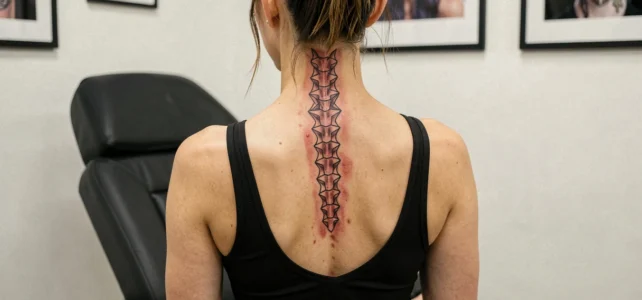
A tattoo along the spine involves an area where the skin is thin, the nerve endings are dense, and the bone is immediately underneath. These three anatomical parameters make it one of the most demanding locations on the body, both for the session and for the weeks that follow. Understanding what happens under the needle and during the healing process allows for better anticipation of each step.
Anatomical Factors of Pain on the Spine
The pain of a tattoo depends on three measurable variables: skin thickness, nerve ending density, and the distance between the needle and the bone. On the spine, these three factors simultaneously work against comfort.
| Factor | Spine | Shoulder / Upper Arm |
|---|---|---|
| Skin + Subcutaneous Fat Thickness | Very low, skin almost adherent to the spinous processes | Moderate to thick, muscular and fatty layer |
| Nerve Ending Density | High (nearby spinal nerve plexuses) | Medium |
| Bone Proximity | Almost direct contact with the vertebrae | Bone covered by the deltoid and adipose tissue |
| Vibrations Felt | Strong, propagating along the spinal axis | Low to moderate |
| Reported Dominant Sensation | Burning + Radiating Vibration | Localized Sting, more bearable |
The spine accumulates conditions for pain perceived as intense. The ink is injected near the bones, causing strong vibrations felt along the spinal axis. This irradiation clearly distinguishes this area from fleshier surfaces like the thigh or calf.
The sensation also varies depending on the section of the spine. The cervical vertebrae (nape) and lower lumbar vertebrae have a higher concentration of sensory endings than the middle of the back. Therefore, a tattoo that runs the entire length of the spine involves fluctuating levels of pain during the same session.
The healing of a tattoo on the spine directly depends on these anatomical characteristics, as thin skin over bony relief experiences more micro-traumas during tattooing.
Anesthetic Creams: Real Effectiveness on a Bony Axis
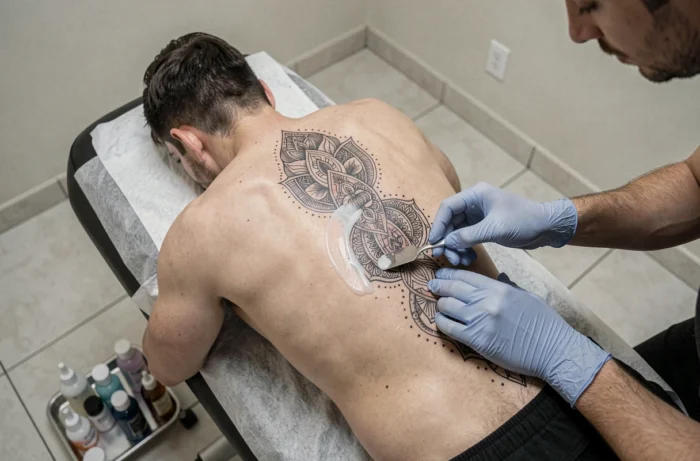
In recent years, creams containing lidocaine or prilocaine (EMLA, TKTX, Biotat) have become popular to alleviate pain during sessions on sensitive areas. Their use on the spine deserves a more nuanced analysis than just “it works or not.”
The anesthetic effect diminishes after the first few minutes. The cream reduces initial pain, but the duration of action remains limited and varies from person to person. On a long piece along the spine, the end of the session often occurs without complete anesthetic coverage.
A rarely discussed point: these products can alter the skin’s reaction. Increased bleeding, unusual redness, and altered skin texture are effects that change how the tattoo artist works. On a bony axis where the margin for maneuver is already reduced, this alteration can complicate the technical gesture.
- Do not apply on irritated or already tattooed skin, which excludes touch-ups on the same area
- Use not recommended without medical advice in case of pregnancy, heart or liver disease
- Follow the manufacturer’s indicated application time to avoid too superficial anesthesia or skin irritation
- Inform the tattoo artist before the session, as they will adapt their technique based on the skin’s reaction
Using an anesthetic cream does not eliminate pain. It shifts and partially reduces it. For a long piece on the spine, breaking the project into several short sessions is often more comfortable than a single marathon session with cream.
Healing of a Spinal Tattoo: Surface and Depth
General articles mention “a few weeks” of healing. This approximation masks a very different two-phase process.
Surface Phase
Superficial healing takes 2 to 4 weeks. Scabs form, the skin peels, and itching occurs. On the spine, this phase tends toward the upper end of the range. Thin skin heals a bit slower than a thick and well-vascularized area like the forearm.
The friction of clothing against the spinous processes is a specific aggravating factor for this area. Wearing loose fabrics and avoiding backpacks during this period reduces the risk of prematurely torn scabs.
Deep Healing Phase
Complete healing of the deeper layers of skin can take several months. During this period, the dermis restructures around the pigments. Exposure to sunlight, prolonged baths, and intense sports activities remain discouraged well after the visible scabs have disappeared.
On the spine, the thin layer of tissue between the surface and the bony structures prolongs this process. The skin receives less nutrient supply from the adipose tissue, which slows down deep cellular regeneration.
Post-Tattoo Care Suitable for the Spinal Area
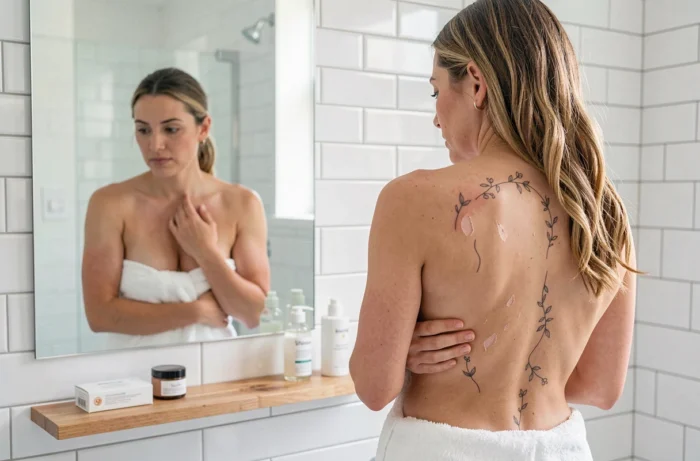
The classic recommendations (gentle washing, healing cream, no baths) apply, but the spine imposes practical adjustments that are often underestimated.
Sleeping on your back becomes problematic during the first nights. Direct pressure on the fresh tattoo can stick the fabric to the skin and tear micro-scabs upon waking. Sleeping on your stomach or side for at least two weeks protects the area.
- Clean morning and evening with a neutral pH soap, without rubbing, by patting with a clean towel
- Apply a thin layer of healing cream (no thick petroleum jelly that suffocates the thin skin of the spine)
- Avoid any tight synthetic clothing that creates a warm and humid environment conducive to irritation
- Postpone the resumption of activities involving twisting movements of the torso (weightlifting, yoga, climbing) until the surface phase is complete
A tattoo on the spine requires longer vigilance than on fleshy areas. The combination of thin skin, prominent bony relief, and constant clothing friction makes this area one of those where touch-ups are most frequent when post-session care has been neglected.
Choosing an experienced tattoo artist for this area remains the most determining factor. A professional accustomed to working on bony axes adapts the injection depth, needle speed, and pause management according to the skin’s response, which directly influences the quality of the final healing.