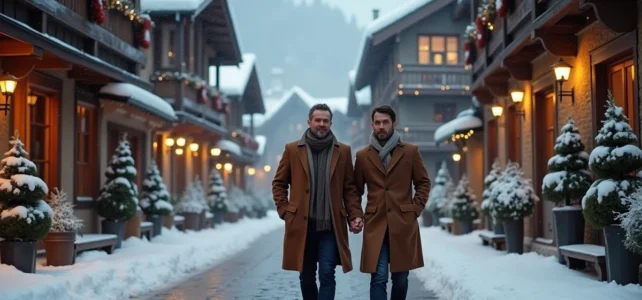
Megève attracts a clientele each year that seeks more than just a ski area. The Haute-Savoie resort has been built around a rare positioning in the French Alps: combining mountain, architectural heritage, and gastronomy in a pedestrian village where luxury mingles with alpine rurality. This identity, inherited from the impetus given by Noémie de Rothschild in the 1920s, continues to shape the local offering, from palaces to charming accommodations that focus on the authenticity of Savoyard architecture.
Megève four seasons: what the summer shift changes for travelers
Megève now operates on a calendar that extends well beyond the ski season. The Évasion Mont-Blanc area structures a complete summer offering: Rochebrune and Mont d’Arbois gondolas open from June to September, dedicated pedestrian rates, family activities like the Village des Lutins.
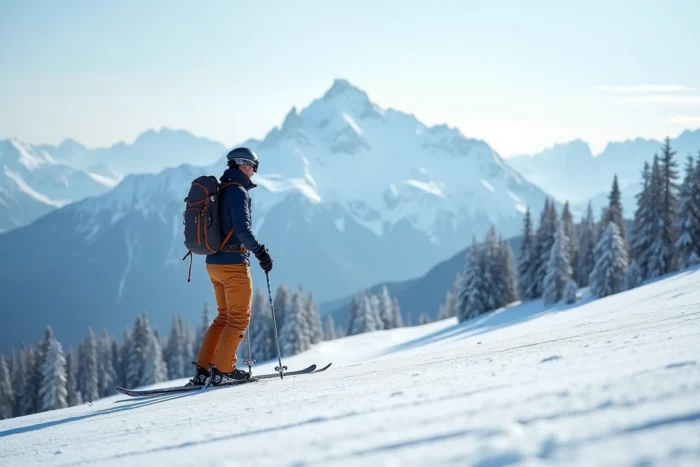
The outdoor ecosystem has expanded well beyond classic hiking. There are more than 150 km of marked trails, including iconic routes like the ascent of Mont Joly, which peaks at 2,525 m, or the historic Calvaire trail. The activity season extends from May-June to November depending on snow conditions, repositioning Megève as an alpine base camp usable for nearly the entire year.
For those seeking accommodation rooted in this authentic mountain spirit, some addresses cultivate the link between comfort and Savoyard terroir, like what https://lafermettedemarie.fr/ offers with an approach focused on the charm of local architecture.
The Mont d’Arbois golf course, regularly cited among the most renowned alpine courses, is also entering a phase of renewal according to specialized press. The Megève Jumping, an international equestrian event, attracts a high-level lineup each edition. These events illustrate the upscale evolution of a program that no longer depends on snow.
Alpine art of living in Megève: beyond the hotel showcase
The content dominating search results focuses on palaces: Four Seasons, Les Fermes de Marie, Alpaga. These establishments embody a specific segment, that of standardized international luxury. However, the Megève way of life is not limited to this offering.
The village itself functions as a pedestrian haven. Designer boutiques, mountain cheese dairies, and artisan wood workshops coexist with luxury brands (Hermès, Loro Piana). This juxtaposition is not anecdotal: it distinguishes Megève from resorts like Courchevel or Val d’Isère, where the commercial fabric remains more uniform.
Local gastronomy revolves around several levels of interpretation. At the top, the table La Dame de Pic-Le 1920 at Four Seasons, created by Anne-Sophie Pic. But the network of traditional restaurants, carnotzets, and farm tables offers a culinary depth that address rankings do not always convey.
Architectural heritage and interior decoration
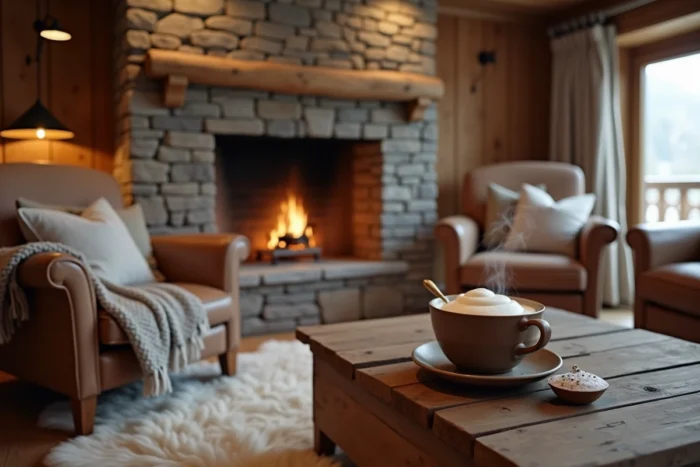
A distinctive feature of Megève lies in the attention given to reinterpreted Savoyard architecture. Pierre-Yves Rochon, decorator of the Four Seasons, has integrated Art Deco elements and pieces from Ariane de Rothschild’s collection. This type of approach can be found on a smaller scale in many local chalets and accommodations, where old wood, stone, and handcrafted furniture are not decorative but structural.
The Chalets du Mont d’Arbois, for example, offer complete privatizations in a setting that combines high-end hospitality and alpine farm architecture. The Lodge Park, on the other hand, claims an aesthetic of “luxury refuge.”
Regulation of seasonal rentals in Megève: a constraint to anticipate
Megève is among the municipalities in Haute-Savoie where tourist furnished rentals are subject to an increasingly strict regulatory framework. Like in other alpine resorts facing land pressure, owners renting on platforms like Airbnb must comply with specific reporting obligations.
The rules cover several aspects:
- Mandatory declaration at the town hall for any short-term rental, with the issuance of a registration number to display on online listings.
- Compliance with safety and health standards applicable to tourist accommodations, verified during occasional inspections.
- Potential limitation of the number of annual nights for primary residences, in accordance with national provisions strengthened in recent years.
For travelers, this regulation has a concrete effect: the supply of non-professional rentals tends to decrease in favor of declared and classified accommodations. This raises the average quality of available housing but also the prices.
Megève facing competition from neighboring alpine villages
Megève does not operate in isolation. The Mont-Blanc massif includes several villages that claim an authentic mountain identity, sometimes at significantly lower price levels. Saint-Gervais, connected to the same ski area, offers a thermal spa and direct access to the Mont-Blanc tramway. Combloux, a few kilometers away, focuses on a more family-friendly setting with an unobstructed view of the range.
The difference lies in the density of services and the coherence of the experience. Megève concentrates an unusually high number of gastronomic tables, food shops, and classified accommodations within a compact area. This concentration creates a destination effect that neighboring villages do not replicate individually.
Value for money remains the main topic of debate among travelers. Some believe that the Megève price premium is justified by the quality of the built environment and the diversity of activities. Others consider that equivalent stays exist at lower costs in the same geographical area, provided one is willing to accept a less concentrated offering.
The choice largely depends on what one expects from a mountain stay. If the priority is a village where everything is done on foot, where gastronomy and architectural heritage matter as much as the ski area, Megève remains a difficult reference to match in the French Alps. A stay focused on pure sports activity would benefit from including Saint-Gervais or Combloux in the comparison, if only for the price differences for similar services.