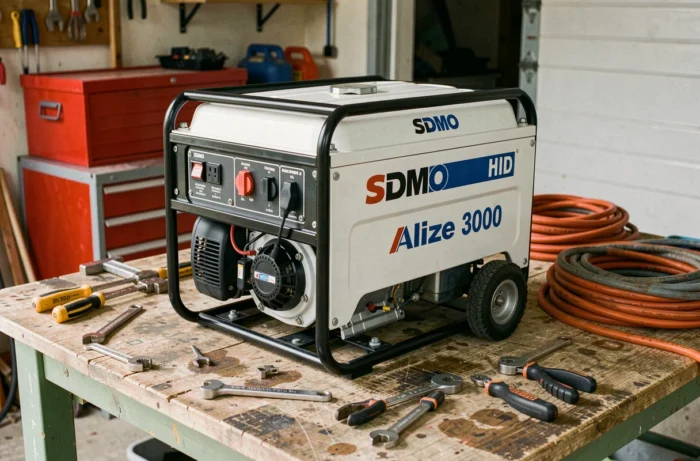
A backup generator is the kind of device you hope to never use, but you want it to be reliable on the day the power goes out. The SDMO Alizé 3000 belongs to this category of portable gasoline generators, designed to power a few devices during a power outage. Manufactured by SDMO, a Breton company that has become a subsidiary of the Kohler group, this model has a rated power close to 2800 W. The question remains whether it lives up to its promises in real-world conditions.
Voltage Regulation and Quality of Current Delivered by the SDMO Alizé 3000
Before discussing raw power, a technical point deserves attention. Plugging in a drill or a grinder to a generator is not the same as plugging in a light bulb. Induction motors cause current spikes at startup, sometimes two to three times higher than the nominal consumption.
On the SDMO Alizé 3000, voltage regulation relies on a classic alternator (not an inverter). In practical terms, the current produced is suitable for construction tools and lighting, but not for sensitive electronic devices like a laptop or a network server. For these uses, an inverter model would be more appropriate.
A discussion thread on Futura Sciences illustrates the risk well: a user plugged a grinder into their SDMO generator, causing a current spike that took the alternator out of service. The generator still started, but no voltage was delivered. This type of failure occurs when the power demand exceeds the generator’s capacity, even briefly. Before publishing our review of the sdmo alize 3000, we paid particular attention to this point.
Always check the starting power of your devices before connecting them. The nominal power of the Alizé 3000 is insufficient if the tool demands double at startup.
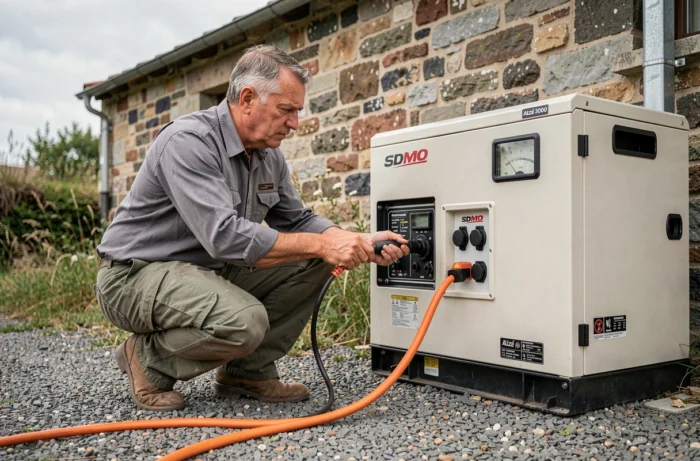
Autonomy and Fuel Consumption: What to Expect
You may have noticed that manufacturers communicate maximum power, rarely the autonomy under real conditions? Yet it is autonomy that determines whether a generator is practical during a prolonged outage.
The SDMO Alizé 3000 runs on gasoline. Its modestly sized tank for a portable unit requires regular refueling if you use it at medium load for several hours. Autonomy directly depends on the applied load: at half power, a generator consumes significantly less than at full load.
Here are some concrete guidelines for managing fuel:
- Run the generator at the lowest possible load, only connecting necessary devices (refrigerator, lighting, phone charging).
- Turn off the generator when you don’t need it, rather than leaving it running idle, which wears out the engine unnecessarily.
- Store gasoline in an approved jerrycan, away from the generator and any heat source, in accordance with the safety instructions in the SDMO manual.
- Add a fuel stabilizer if the generator remains unused for several months, to prevent carburetor clogging.
Maintenance of the SDMO Alizé 3000 Generator: Critical Points
The user manual for the SDMO Alizé 3000 details a structured maintenance program. However, in practice, two areas concentrate the majority of avoidable failures.
Oil Change and Engine Oil Level
The gasoline engine of the Alizé 3000 is compact. An insufficient oil level causes rapid overheating, and on this type of generator, the level sensor shuts off the engine before damage occurs. This is a safety feature, not a comfort: if the generator stops during use, it is often due to a lack of oil. The oil change should follow the program indicated in the manual, with oil suitable for a four-stroke engine.
Spark Plug and Air Filter
A fouled spark plug or a clogged air filter reduces engine performance and increases consumption. On a generator used as a backup (thus rarely), the risk is more about spark plug oxidation during months of inactivity. Run the generator for about ten minutes each quarter to keep the components in good condition.
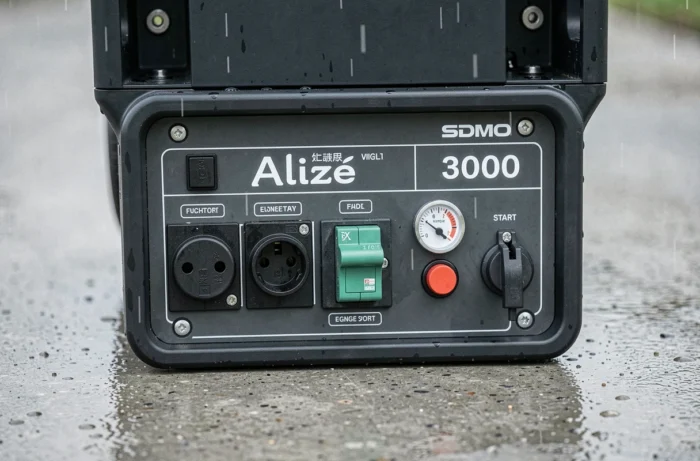
Gasoline Generator or Home Battery: Which Backup to Choose
The SDMO Alizé 3000 remains a thermal generator. However, French regulations increasingly encourage non-fossil storage solutions. The ENR law of March 10, 2023, and the European electricity market reform of 2024 promote the development of home batteries coupled with photovoltaics, including for individuals.
Why is this point relevant in a generator test? Because the choice between a gasoline generator and a backup battery depends on the intended use:
- For a construction site without electrical connection or occasional outdoor use, the gasoline generator remains the most straightforward and least expensive solution.
- For residential backup (power outages), a home battery offers silent and emission-free operation, with a higher installation cost but virtually no maintenance.
- For mixed use (home and outdoor DIY), the portable generator retains a versatility advantage that the fixed battery does not have.
The SDMO Alizé 3000 positions itself as a reliable backup for occasional uses. In a long-term electrical resilience project, it is better to consider it as a complement rather than a standalone solution.
The Alizé 3000 does what it is asked to do: provide backup power with a proven gasoline engine, in a transportable format. Its limitations stem from the technology itself, not from a manufacturing defect. The most determining factor remains adherence to the maintenance program, which directly affects reliability on the day you need it.