Raclette holds a special place in French eating habits. With around 37,350 tons of raclette cheese purchased by households in 2024, this dish far exceeds the status of a simple winter recipe. Its popularity is based on specific mechanisms, which relate as much to the chemistry of the cheese as to the structure of the meal itself.
Seasonality of Raclette: A Highly Concentrated Consumption Peak
Have you noticed that the raclette sections in supermarkets triple in size starting in October? It’s no coincidence. According to FranceAgriMer data, nearly half of raclette purchases are concentrated between October and December. The switch to winter time triggers a sharp increase in volumes.
This extreme seasonality distinguishes raclette from other cheeses. Comté or camembert can be purchased year-round. Raclette, however, acts as a seasonal signal. When the cold arrives, the reflex is collective.
On the production side, the cheese supply chain follows this demand. French production of raclette cheese increased again in 2025, with a rise of about 1.5% over the year. Raclette now represents approximately 27% of all unpasteurized pressed cheeses made in France. Consumer enthusiasm is literally driving the sector, as detailed in a comprehensive file on the Toutes Les Recettes website dedicated to this phenomenon.
AOP Raclette Cheese: What Changes the Taste in the Pan
Not all raclette cheeses melt the same way. The difference lies in the fat content, aging, and the origin of the milk.
An AOP cheese from Valais or Savoie melts differently than an industrial cheese. Industrial cheese, aged for a few weeks, produces a more rubbery texture, while a cheese with an appellation offers more aromatic complexity.
This economic weight explains why France and Switzerland each protect their appellations. Swiss AOP Valais raclette and French IGP Savoie raclette adhere to distinct specifications.
Criteria for Choosing a Raclette Cheese That Melts Well
- Prefer an aging of three months or more for a consistent melt and developed aromas
- Check for the AOP or IGP mention on the label, which guarantees regulated milk and processing
- Avoid low-quality vacuum-packed pre-sliced cheeses, often too young and too moist, which release water in the pan
- Taste before buying when possible: a good raclette cheese has a clear, slightly salty flavor, without bitterness
Raclette and Charcuterie: Pairings That Structure the Table
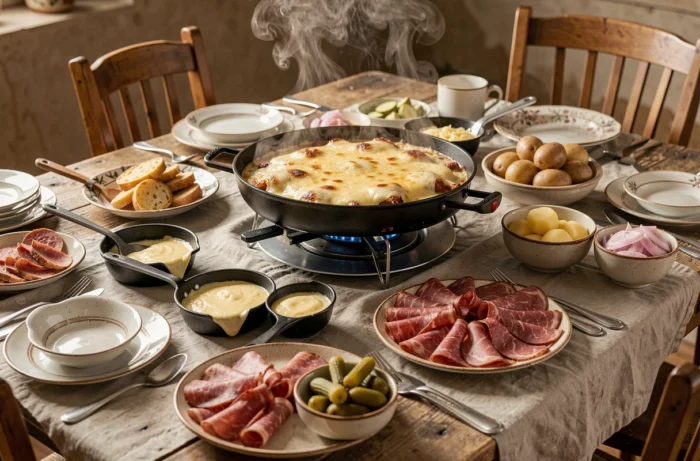
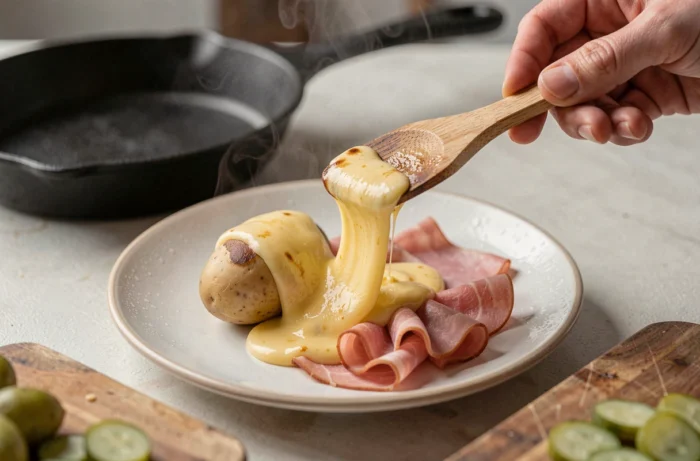
Raclette is not just a cheese dish. It’s a system of pairings around the table. Charcuterie, potatoes, pickles, and onions form a whole where each element plays a specific taste role.
The charcuterie provides the salt and fat that balance the creaminess of the cheese. Raw ham, Grisons meat, coppa, or rosette: each piece has a different intensity. Raw ham, milder, allows the cheese to dominate. Coppa, spicier, creates a contrast.
Potatoes, steamed with their skins, serve as a neutral base. They absorb the melted cheese without overpowering the flavors. Pickles and small pickled onions cut through the fat and stimulate the appetite between pans.
What Wine to Serve with Raclette
The classic pairing remains a dry white wine. White wines from Savoie (apremont, chignin) work well due to their bright acidity that cleanses the palate between bites. A light white Burgundy, like Saint-Véran, offers a rounder alternative.
A light red wine can also accompany raclette, provided to avoid marked tannins that clash with the fat of the cheese. A Pinot Noir from Burgundy or a Gamay from Beaujolais is better suited than a full-bodied Bordeaux.
Why Raclette Creates a Meal Different from Other Winter Dishes
Fondue, tartiflette, gratin dauphinois: the French Alps have produced other melted cheese dishes. Yet, raclette prevails in popularity. The reason lies in the structure of the meal itself.
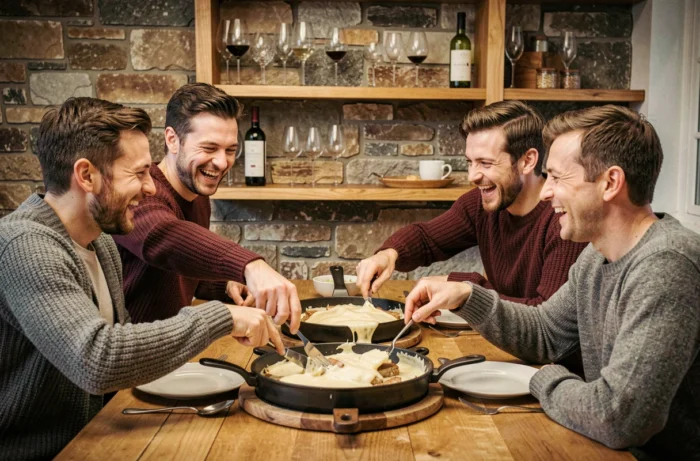
With a tartiflette, the dish arrives ready. Everyone eats the same thing. With raclette, each guest composes their plate at their own pace. This personalization mechanism removes constraints. Children avoid strong charcuterie. Cheese lovers double the pans.
The raclette machine, placed in the center of the table, also imposes a slow tempo. The melting time (two to three minutes per pan) creates natural pauses in the meal. We chat, we wait, we watch the cheese bubble. This slowed rhythm is the opposite of a rushed weekday meal.
The success of raclette in restaurants confirms that the raclette ritual also works outside the home setting.
- Each guest manages their plate: no single dish imposed, no frustration
- The melting time enforces a long meal, conducive to conversation
- The central appliance creates a visual focal point around which the group gathers
Raclette owes its success not to a complex recipe or a rare ingredient. It relies on a meal format that allows everyone freedom, a cheese whose melting is a small spectacle, and a seasonality that turns each winter evening into an anticipated event. The day someone invents a dish as simple to prepare, as unifying at the table, and as satisfying to eat, raclette may have a rival.