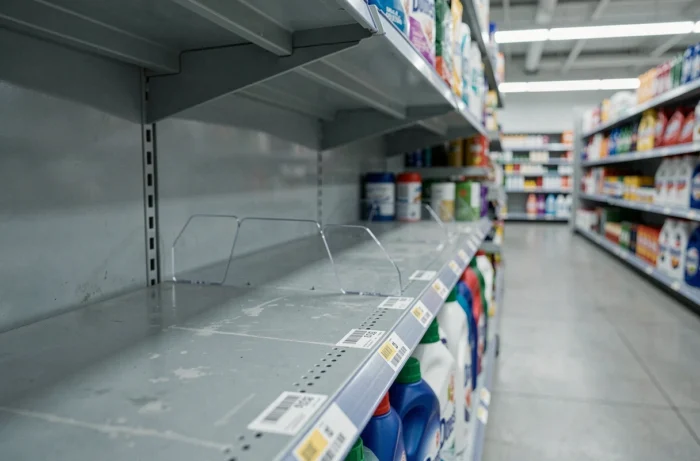
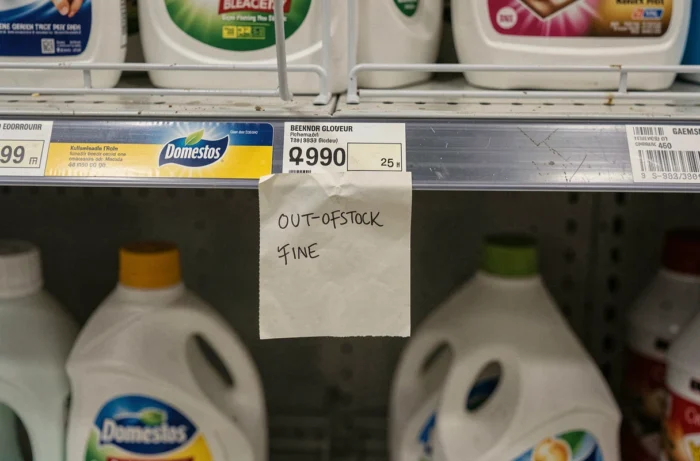
Domestos, the toilet cleaner with bleach recognizable by its blue bottle, regularly disappears from supermarket shelves in France. This phenomenon is not merely a temporary stock outage. Several structural mechanisms, linked to Unilever’s industrial strategy and the recurring tensions between brands and retail chains, explain these prolonged absences.
Portfolio Adjustments at Unilever: Home Care Division Under Pressure
Domestos belongs to Unilever’s Home Care division, which includes laundry detergents and cleaning products (Cif, Skip, Omo, Domestos). This division accounts for about one-fifth of the group’s revenue but shows the slowest growth of Unilever’s four major divisions.
This situation has direct consequences on supply. In its financial communications, Unilever indicates that it focuses its industrial and marketing investments on categories with higher margins or stronger growth. Therefore, historical cleaning products with low turnover are the first to be affected by reductions in references, format rationalizations, or restocking delays.
An article detailing why Domestos is unavailable highlights this internal arbitration mechanism, often invisible to the consumer who only sees the empty shelf.
In other words, the shortage of Domestos is not solely the result of logistical difficulties or raw material shortages. It also reflects strategic prioritization choices within the group.
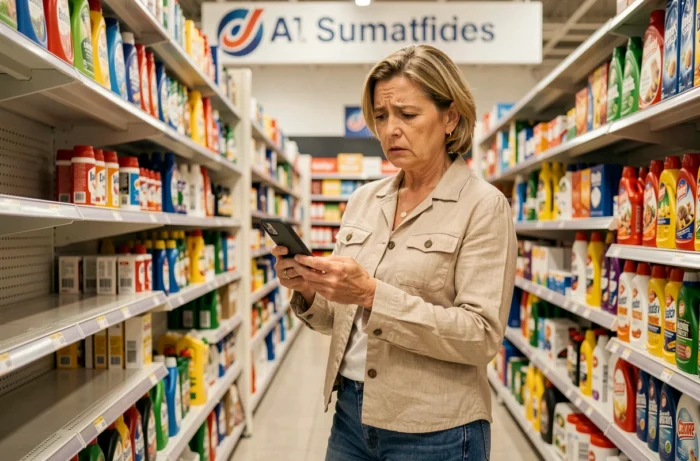
Domestos in the Face of Retail Negotiations
The tensions between manufacturers and retail chains constitute a second factor. Each year, commercial negotiations between suppliers and distributors can lead to temporary withdrawals of products. The mechanism is known: when an agreement on prices is not reached, the retailer can “delist” a product, meaning it is removed from its shelves.
This phenomenon has been documented for other brands within the Unilever group and for competing groups (PepsiCo at Carrefour, Mondelez in several chains). Domestos, as a product with moderate volume in a less differentiating segment, represents a lever of pressure easily activated by both parties.
Delisting or Voluntary Order Limitation
Two scenarios arise:
- The distributor suspends orders to force a price renegotiation, gradually emptying the shelf without an official announcement.
- Unilever reduces the volumes delivered on certain unprofitable formats, directing demand towards higher-margin references or towards geographic markets deemed priorities.
- In some cases, both dynamics overlap, making it difficult for the consumer to identify the exact cause of the absence.
The result is the same in all three cases: the bottle of Domestos disappears from the shelf for several weeks, sometimes several months.
Logistics Chain and Raw Material Tensions
Episodes of shortages in retail have multiplied since the Covid period. Stockouts have reached historically high levels, with billions of euros in lost revenue for distributors according to the NielsenIQ barometer cited by the specialized press.
For a product like Domestos, several links in the chain can simultaneously seize up:
- Supply of chlorine and bleaching agents, subject to fluctuations in the European chemical market.
- Production of plastic packaging, regularly disrupted by rising energy prices affecting European industrial sites.
- Road and river transport, affected during heatwaves or droughts (low levels of the Rhine, for example, caused difficulties in transporting fuels and chemicals in eastern France).
Each weakened link extends restocking delays, and products with low strategic priority like Domestos end up at the back of the line.
Comparative Factors of Shortage: Domestos vs. Other Brands Removed from Shelves
| Factor | Domestos (Unilever) | PepsiCo Products | Mustard (multiple brands) |
|---|---|---|---|
| Internal Group Arbitration | Yes, low growth division | Not documented | Not applicable |
| Commercial Negotiation / Delisting | Probable depending on retailers | Confirmed (Carrefour, 2024) | No, supply disruption |
| Raw Material Tension | Chlorine, plastic packaging | Oils, flavors | Mustard seeds (drought Canada) |
| Typical Duration of Absence | Several weeks to several months | Several months | Several months (2022) |
| Easy Substitution by Private Labels | Yes (generic toilet bleach) | Partial (chips, sodas) | Difficult (specific taste) |
This table highlights a particularity of Domestos: the combination of industrial arbitration and commercial tensions, whereas other famous shortages primarily stemmed from a single factor (climatic for mustard, commercial for PepsiCo).
Substitute Products and Retailer Reactions
In the absence of Domestos, retail chains are responding by expanding the space allocated to private label brands. Bleach toilet gels under the Leclerc, Carrefour, or Auchan brands are filling the vacant space.
For the consumer, substitution is technically simple. The formulations of bleach-based toilet cleaners are relatively standardized. However, brand loyalty to Domestos remains strong among some buyers, fueling online searches and the feeling of shortage.
Unilever has also invested in artificial intelligence tools and digital twins to optimize its logistics chain and better anticipate demand cycles. These technological investments, documented in the group’s communications, aim specifically to reduce stockouts across its entire portfolio, including the Home Care division.
The shortage of Domestos in France thus results from a combination of causes, not a single factor. The relatively low weight of the product in Unilever’s overall strategy remains the least visible factor, and probably the most decisive.